– December 2024 –
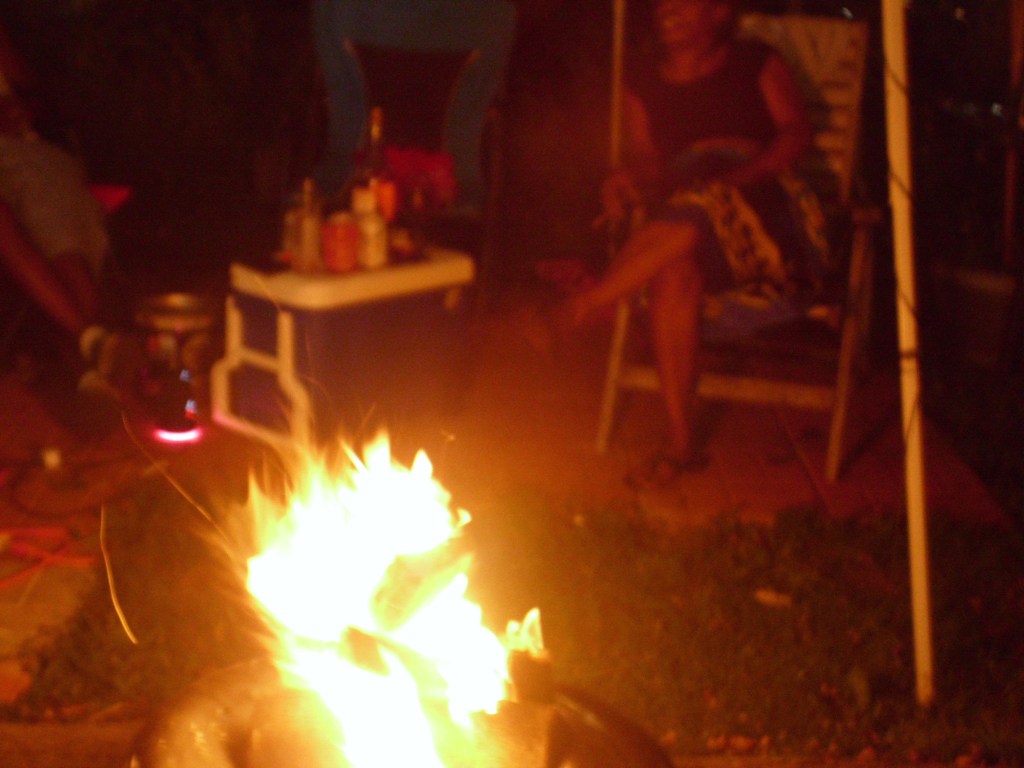
I vomited pink clumps as my mother and her friend smoked and laughed, their loud rap music a current beneath, above, around, within the air. Absently, vision wavering and dancing almost sweetly, almost, I noticed the night beyond the window.
“Finley,” she said, “Finley.” Not laughing now, her face serious, ugly where the shadows drew out her features. “I asked you where you got it.”
“The Jewel-Osco, the one next to school.” I coughed. The room tilted on an axis.
“I don’t understand how they could let a 12-year-old buy a bottle of 500 Tylenol. How many did you take? How many?”
“How many? Oh, I don’t know.”
“You need to count them.”
“Okay.” I sat cross-legged on the floor and poured out the contents of the bottle, the poison now and still gnawing at my stomach, threatening its exit from my mouth.
Now she was on the phone with Jewel-Osco customer service. “This is unacceptable, unacceptable, my daughter bought a medication there—”
“Well, ma’am, it’s not really against the—”
“I don’t care!”
I could feel my body wither. My young fingers fumbled around the pills, moved them from one pile to another, uncounting, dazed — dazed so that the memory is hazy now from time, and trauma, and smoke. My child’s mind could not understand her anger; here was my body aching from pills and shrinking, the mind battered over such brief years that this small thing, fragile thing, bird thing that was me, that I call myself now, would wish for its end; and her anger, more likely her fear, but cloaked in rage so I sat and swayed beneath acetaminophen weight, and tried to do as she had told me.
Years now passed, a decade, and my therapist and I discussed my inability to trust myself, the heft of doubt, insecurity, second-guessing, weighing ever on my intuition.
“Well, your mom never believes you, never tries to shoulder the weight of your feelings. Here your body tells you something. Your heart pounds in fear, you’re sweating, your chest is tight — you’ve poisoned yourself in pursuit of something awful — and she tells you to count the pills and yells at a Jewel-Osco employee, while her friend laughs and smokes.”
I remembered moments in my childhood where doubt had touched me, a feeling that what moved in me, what I thought I felt, was false — false because she did not believe me, false because she did not care.
Most memories are vague now, cloudy. They are slow, lingering images, but incomplete, my mother’s boyfriend pinning my brother down, the silent ride to my aunt’s when DCFS removed us from the apartment. Bits maybe not of tragedy — I felt silly calling it that — but of a young life damaged and thus altered.
I grappled with the speechless memories sometimes, though mostly I wondered how I could possibly address them. They were fragmented, painful, brief things, resisting all but the sting of their half-remembrance.
Matthew loved his young daughter Lucy dearly, with everything. He spoke of her constantly, laughing, his eyebrows high and his mouth shining pink and white. I had never met her, but I cared for her because and as he cared for her; I cared for her through him.
He talked about her at the hockey game, our 3rd or 4th date, between jokes about the goalie who incessantly hawked loogies onto the ice while facing the crowd.
“And I brought her to studio with me, asked if she had anything to say to the class.” He laughed, waiting for the perfect timing. “You won’t believe it… she said in the sternest voice ‘Just get the work done!’”
“So harsh!” I said. “She will lead millions.”
A week later, after Thanksgiving, he told me how coming back from New Jersey late at night, he carried her, sleeping on his shoulder, into her bed — “can’t think of a simpler joy.”
I imagined it, the glances of swelling heart he must have cast into the rearview on the drive home, the eyes wide and reflective, the lips in a calm smile, almost melancholy at that fragile thing, a sleeping child. And arms wrapped around her small body, gingerly yet secure, up the hill by the front door, baby steps, eyes straining the dark. He might linger there after he laid her down to sleep: listen to the breath, watch the hair tousled, the little body still but for the little lungs doing their work.
I wondered how Matthew’s love would morph as Lucy aged, when she became interested in literature or in science, when she graduated college and began that rapid-stress search for a job.
Really, I suppose, I imagined my own mother and how I hoped she might have loved me, then and now — how she might have talked me through applying to a humanities program in Copenhagen or helped me edit my research project on libraries, listened thoughtfully to a song I wrote on guitar or read an essay I wrote for the school paper.
Now, from childhood, the memory of torments that now seem too minuscule to mention: lamplight washing the room as she vacuumed the rug on which I stood in the center, not more than ten years old, arms outstretched and shaking from hours like that, playing a squeaky violin. I wailed, bones aching, embarrassed — “Oh, you’re okay.”
Time and distance made her mellow — I had moved in with my aunt around freshman year of high school — but now the dull cuts. “Ooh,” she said when I sent her an essay I had written, “I gotta read this on the toilet.” “When do you graduate college again?”
I tried to not let these tiny pains, sediment upon the deeper pains of childhood, cloud the love and care and pride I knew she felt for me. This was a woman who every time I visited, and she often implored me to visit, asked her chef husband to prepare what I wished to eat; who had custom shirts made when I graduated high school; whose very body fed mine — though she said in rage once, when I was child, that she should have aborted me — who tried her best, I suppose, to care for me and my brothers. Sacrifices untold, pain I can only guess at.
And yet. And yet. Matthew speaking of Lucy, singing of her, jewels rolling from his tongue. Surely my mother loved me how a mother is bound to love her child; surely I did not feel it.
“She said she wanted to apologize,” my brother said, filling me in on a call I missed. “She said if she had used her small inheritance when her dad died the right way, finished college, things would have been different for us. She feels guilty.”
“What did you say?”
He smiled. “I told her it was all okay. Our childhood made me the way I am. I like myself.”
Why shouldn’t he? He had served in the military and besides that was wildly creative, making YouTube videos about piracy and AI art, recording original raps detailing his complex inner world. I did some of the same things in practice, writing songs even in childhood and making poetry alongside digital art on my tablet — but I had never been able to feel as if it were enough — as if I were enough.
And I looked with envy upon friends and acquaintances — E, whose father ran a popular bike shop where foreign nationals and academics from the university came to browse, where she practiced Spanish with the patrons and learned maintenance from her dad; S, whose parents were entertainment lawyers and thus connected to bright creatives in the city; G, whose mother would proofread her essays and cover letters.
What if I had a mother who had gone to college, or who knew how to sew or woodwork, or speak another language or paint with watercolors? Would I be more interesting? More creative? Smarter? More loveable?
I was angry with my mother, I realized bitterly, in part because she had us young, and because she was poor — but chiefly I suppose because I hated myself, and she, I thought, had made me this way. Every infirmity I perceived in myself — if it took me too long to solve a problem, if I couldn’t get myself to practice enough to become proficient at a skill, it was because I had been “dysregulated” in childhood, that was what an old therapist said. The almost chemical instability between my mom and her partners, the bedbugs or the mice or the cockroaches, no breakfast some days.
I imagined tearfully how things might have been. I thought of it as a sort of “critical fabulation,” Columbia University Professor Saidiya Hartman’s term for what we might do when the historical record is incomplete, specifically the record of Black women’s lives. One imagines what extant records might lead them to imagine; one imagines sorrow; one imagines joy.
Could I fabulate my own childhood? If my mother was not rich, not creative, could she at least be loving? Could I imagine myself loved in a way that made sense to me and felt like how a mother’s love for a child should feel: thoroughly and deeply uncomplicated, profound in its very simplicity, untouched by money or poverty or the broken love of men.
The missing links of my youth, where trauma had layered its fog — perhaps I could supplement them with hopeful imaginings, where Mom and I paint together. We watch a Nat Geo documentary. I am sick from pills and sick from life and death is a shadow I wish would fall; she coos as she carries me to the car, pressed against her chest, and drives me to the hospital.
I would imagine what Megan had. We had built a friendship over the first few months of high school, and I stayed at her house a couple nights a week. Those times, we’d watch Bob’s Burgers with her brother and parents, teasing when Gene made a stupid mistake, grimacing when Tina exhibited her customary awkwardness.
“Okay, up to bed,” Megan’s mother would say. “Goodnight, girls.” Her face cool in the moonlight that fell from the skylight in the upstairs hall, her hair gray and blond and yet vital, the woman strong and soft.
Mornings, I’d wake before Megan and walk those wooden steps, a staircase her father had built, down, down to the table where he sat. With Devil’s Sudoku in hand, “harder than hard,” he’d say, with his feet soaking in an Epsom Salt bath beneath the table. We would speak until the house stirred.
“Coffee?” he might say.
“Oh, I hate the taste — but maybe with enough sugar…?”
“Kids. Good coffee’s bitter. Wakes you up!”
“No thanks, then. I’ll stay drowsy.”
He was a guitarist and might be listening to Bob Dylan or the Beatles. The first time I heard “Friday I’m in Love” was in the car with the S family; I was with Megan’s dad when I realized that Dylan did indeed write “Shelter From the Storm.” It was not, after all, a cover.
My 16th birthday, Megan’s dad, always a cook, helped us make tiramisu. “You dip the wafers into the coffee. No, faster than that, faster,” he laughed. “Look, they’re getting soggy, breaking apart. Faster!”
He left Megan and I to ourselves and now her kitchen was flush with the candlelight shadows of streamers like long lines of blackness filing down the wall. Around us floated pink, purple, and white balloons and the crinkling of the plastic tablecloth. The 1 6 candles glowed softly from the finished tiramisu on the table. Perhaps a secret wish.
In the yard, next, standing in the thickening half-dark beyond the silence of her fluorescent porch lights. Her father’s butted cigarettes sprouting from her mother’s flower pots at the bottom of the stairs, sprigs of something dead genuflecting in the winter wind. We chose one that was frozen in a slouch, struck a match against a rock in the pot, raised our hands against the wind, lit the tobacco that remained.
“It’s so gross,” Megan said, “thinking about my dad’s mouth on this.”
We looked at each other and laughed; it was early high school and the cigarette curiosity trumped all, regardless of her dad’s mouth, simian, Megan might say, having touched their filters.
And Thalia, in sixth and seventh grade: the purple wall, papered with mismatched framed photographs in the near-Boystown apartment they called their home.
Once, holding Thalia’s phone, I accidentally opened a ride-sharing app, realized my mistake, closed it immediately. Then, sitting on the couch watching the street, I saw a car with that white U in the window double park with its hazards on.
How my little heart trembled — oh no, I called this Uber on accident and now they’ll have to pay to cancel it, oh no, oh no. Maybe they’ll ask my mother for the money, she’ll be furious, oh god.
Fear shaking my body, I said, “I think I accidentally called that car,” now tears threatened to fall — “Oh, oh,” Thalia’s mom said. “Let me check. Look, it’s okay, you didn’t. It must have been for someone else.” She held her soft hand under my chin. “Look at me, Finley. Never, never keep something like that inside.”
Alone in the house, the five of us — me, my two brothers, my mom’s boyfriend’s son and daughter. A hungry child, I attempted slicing an apple and accidentally cut my finger — not badly, but so it bled. We were all young, under 15, and now as my finger bled we wondered whether to call an ambulance.
“It hurts, it hurts,” I said. “Let’s call my mom!”
We called and called, scared of the blood running from my finger, our child hearts trembling because we were in fear, because we did not know.
“Why you call me so many times?” Mom said when she got home a few hours later.
“Mom, my finger—”
“This? Please. Unless you cut off your hand, don’t call me that many times.”
I thought of Thalia and how her mother held me close with a gentle sigh. And perhaps the future of love I would feel from friends and their parents hung like a specter: love that would shine on me and warm me, keep me safe for a couple of hours on the weekend, but that I would leave at the door to my mother’s apartment. Love that left me cold now with the chill of my own mother’s indifference. That left me starving because I had, for a moment, been full.
Now, college age, I consider what I have imagined: that my mother’s love asked no questions, made no comments, but served and provided and nurtured.
I consider what is real: the supple touch of others’ lives upon mine, beautiful, necessary, that melded me as if by magic — that, perhaps, I left, but did not leave me. This was a reality I shared with those my young heart had dared to love.
They had loved me, known me — so was it true, what my therapist said, my professors, my friends, my partners, all across the years of my life, kind words I am too shy now to repeat?
But I saw that repeating those words could bring me to love the person I had become, the person my friends and their families, and even my mother, through some calculus, had made me — but also the person I had helped myself become. They had shown me tenderness, taught me through action a tenderness I might learn to show myself.
“Leonard Cohen, really? Wow!” my high school guitar teacher said. “Your parents must be professors.”
No, I had thought defiantly, almost proudly. It was Daniel’s family who showed me Cohen, and I who took the bus to the library and searched the racks for his CDs and records, the discs and vinyl spilling from my arms and onto the checkout counter. Late nights, I listened to his music and tried to emulate his sound in my own songs. I dreamt of how I could become like him, a poet, a novelist, a folk singer, and tried to form myself in that image. I had had, perhaps, a secret, childhood faith in who I knew I could become, but that I could neither verbalize nor internalize.
I think of this now, in quiet moments I have built for myself: at my desk piled with New Yorker magazines, in my favorite coffeehouse listening to a CD. Perhaps, yes, it had been and even was still true, the bright things I had often heard repeated, but, because of the way my mother loved me, I had seldom truly felt.
It was first, I saw, to imagine myself loved. Then to feel incontrovertibly the buoyancy, real, of those who loved me. Perhaps then to love myself, a project, an endeavor, a pursuit. To move forward from my mother and yet to take her with me, this woman who loved me in her way and formed me as mothers form their children; but also to see that other hands, soft and loving, mine among them, formed me, too.
I blamed her for something that was not a tragedy: I am not sure of the calculus, I do not care to ascertain the shares and measures, but she is in me, this constellation, has given herself to this project. Her prints are upon my skin. Where once I believed I had to forgive her to move forward, I now know to move forward first, to love myself as I am now. To blame her for who I am would be to dismiss all in me which is worth loving — and perhaps all of me is worth loving.
 In Extenso
Leave a comment