– December 2024 –
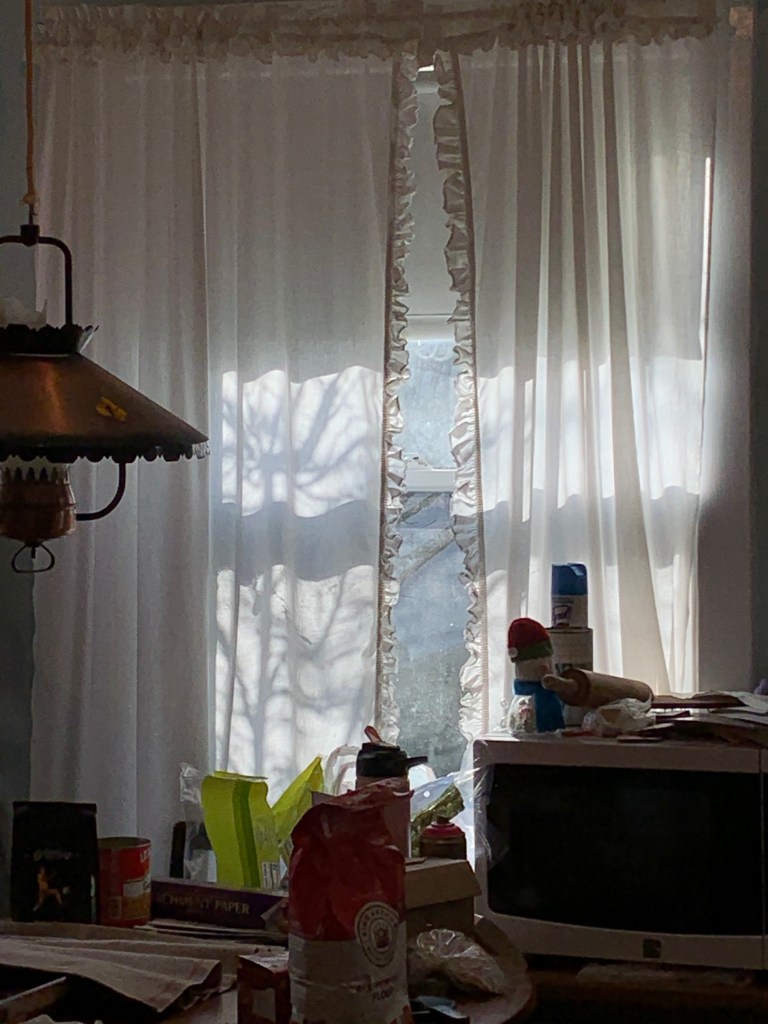
First the place with hardwood floors where my mother would lie in the sunlight. Then the one with the big courtyard full of dead grass and brown staircases like so many spines winding up the back of the building. The graystone with the crumbling balcony outside the window of my brothers’ room. And on until the apartments, the addresses, jumble senselessly in my memory. There was a frantic, sad way in which we tried to make all of those places home. We put magnets on the refrigerator, posters on the walls. Hung plants from the curtain rods and taped Christmas lights to the door frames. In all my young sadness, I even put a blue-backed snow globe on the windowsill in my room — in the apartment with the breakfast nook with wide windows looking out onto the boulevard — hoping it would make the place feel more like home.
We returned to my aunt’s house after every eviction, every time an apartment didn’t work out because of my mother’s job insecurity. This was where my brothers and I took refuge. This was the home that would not disappear, so far from those countless apartments between which we ping-ponged in my youth. Here was a place whose steps I could navigate in the dark. Here was a place I knew. The curve of my fingers was worn into the banister; my thumb tacks left Morse code scars on the wall; strands of my curled hair laced the carpet.
“We have to move your mattress to the living room. Yeah.” My aunt stood in the center of my room beneath a ceiling threatening to cave. Streams of water fell to the carpet and made loud squelches as she shifted her weight. “No, no. This is not habitable.”
The blue paint ribboned and wrinkled, and there was in one corner a sac of water that ballooned beneath the plaster. My aunt looked up at it and shook her head.
“Yeah, that’s got to go.” She lumbered down to the kitchen to get a knife and bucket. When she returned, she climbed on the desk chair, placed the bucket beneath the sac, and arched her body away from the wall. In one quick motion, she drained the sac like a sore and tore away large bits of the plaster where it had been drenched and soiled. She climbed down and looked at the carpet. “Oh, Lord, help us.”
She sat on the drenched floor and began cutting up pieces of the carpet that were damp such that they would never dry, revealing the old, hard plywood beneath. When she stood ten minutes later, she repeated: “We have to move your mattress to the living room. Finley?”
I stood in the doorway and attempted to make sense of the scene — the books in the closet distended with rain. The paint torn and sagging. The constant drip of the leaks and my aunt’s steady oh lords. The room smelled old and damp, though it had only been leaking for a few hours yet.
“Finley.”
I blinked. “Okay.” I moved to the far side of the bed frame and squatted to lift the edge. My aunt lifted her end.
So we put the mattress downstairs and moved my CDs and books and posters and old miscellanea to the basement. We left the room a dank cavern with mildew crawling up the walls, bits of paint and plaster hanging from the ceiling, half the carpet pulled up, a shell of the personality and vitality it contained before.
I sat beside my aunt and wept.
“Okay, okay.” She wrapped her arm around my shoulder. “It’s okay.”
The vast night hour of my youth returned to me, so often marked by the sad motion of packing boxes and clothes and memories. The dark night on which my mother, brothers, and I loaded a storage locker full of every belonging she could not take to the shelter: the Strawberry Shortcake birthday card I received from an aunt or uncle, the brown dog puppet given to me by my absent father, the young adult novel I’d stolen from the school book fair because I could afford nothing else. I recalled the night, too, when my mother admitted that she had defaulted on the locker’s monthly payment, and we had lost the physical items in which our memories were vested.
I felt a child — my younger self — quake within my body. The deep fear, the lethal fear — another home, gone. My room, my sanctuary, my safety, taken, like all the sanctuaries and safeties before.
“Finley? Finley.” Toby cast a glance to where I sat in the passenger seat as he drove north toward Evanston. “You doing okay?”
I looked at him. “Hm? Yeah, I’m okay. It’s difficult. I mean, my bedroom is in the living room.” I chuckled sadly.
“Yeah. But your bedroom could be in the basement. Aren’t there spiders down there?”
“I suppose it could be worse.”
“And anyway, I rescued you! You’re welcome. The room at the Janes Place is in the attic, a normal place for a room.”
“I’m excited to see it. I guess anything’s better than the living room-bedroom situation.” I turned back to the window. We drove along the shore and the lake flashed its cool blue along the horizon. The sun drifted over it, almost gray in the chill of this February day.
Toby had been living at the Janes Place, named for the owner of the house, for a few months now. It was the early spring of 2021, and Toby’s family friend was traveling to Florida for the season, leaving her Evanston, IL, house vacant — until the friend decided she needed a housesitter. Me, Zachary, and Ryan in tow, his friends from high school, Toby happily volunteered. When I complained to him about my troubles at home — the void in my stomach when I passed my ugly, empty room; the discomfort of sleeping downstairs with no walls, no privacy — he opened the Evanston house to me.
“I’m a little worried.” I looked at my hands. “Going to another place then having to leave.”
“Finley, you’re getting ahead of yourself. You just need to slow down and focus on enjoying while you’re there. There are good things that don’t last forever. That can be okay.”
I nodded. Perhaps he was right.
My first full day at the Janes Place, I wandered throughout absolutely stunned. There was no room, no crevice in the entire house not vivified by mid-morning light. By 8 a.m., the red armchair by the window in the attic was framed with a not-quite-yellow glow, which also brightened the coffee cup my new roommates used for cigar and joint ash, and the snake-like orange peel that Toby had left withering beside it.
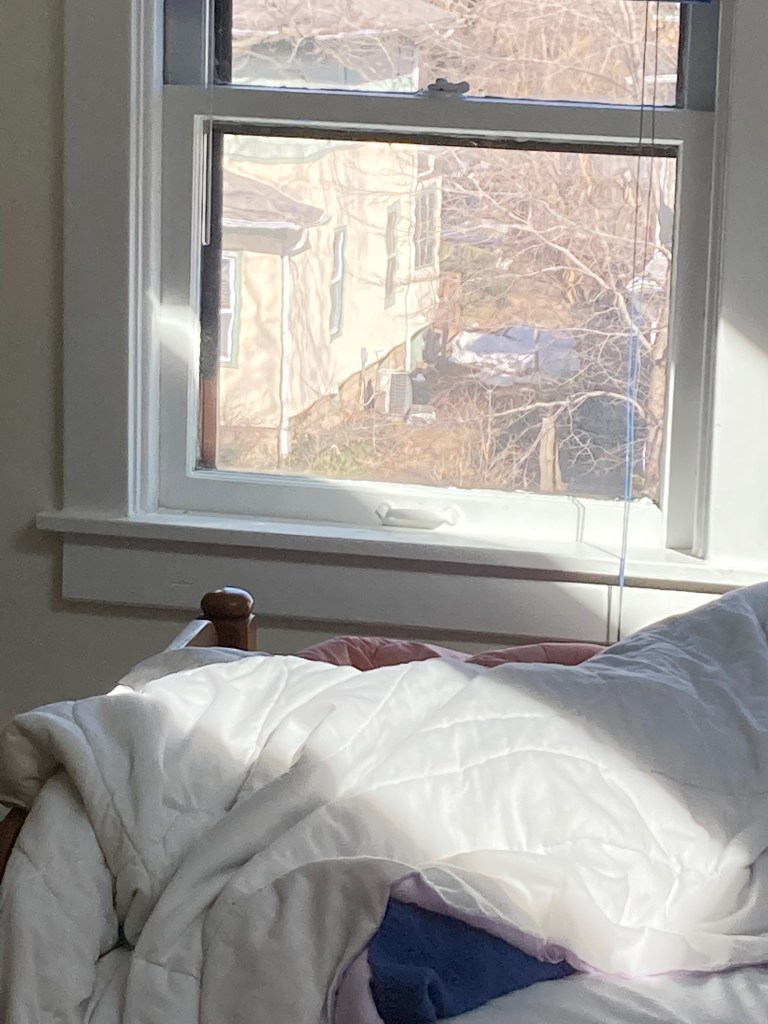
The sun fell through the latticed windows of the nook, tracing yellow arabesques on the white walls and casting silhouettes of the watering can and lighthouse photographs. The wooden browns of the tables and window frames glowed with the sunshine. I thought of the homes of my childhood, dim and narrow, as though they folded in on themselves — always temporary, always in some stage of falling apart. It struck me that light had rarely entered those spaces the way it did here.
All about the place was evidence of a life lived. The old woman who owned the house had framed collages of family photos, always inclusive of their golden retriever, all across the walls of her room. She had outfitted every window with white ruffled curtains. She left scuff marks on the kitchen floor from pushing back in her chair, handprints on the blue wall from leaning against it. She left the screwdriver on the bathroom windowsill and the broken shutter next to it on the floor, beneath wallpaper of anatomical sketches of boats. Her half-empty liquor bottles were in the cabinet, her classical records on the coffee table, her quilt thrown over the back of the rocking chair.
The old woman had lived in this house slowly, deliberately, in a way that — given my transitory youth — I could never imagine. She had grown into the house and left her mark upon it, the pictures, the scuff marks, the one broken cabinet. I wondered how it would be to have lived at my aunt’s all my life, not merely when things went awry, to have melded with the house as easily as the old woman did.
I knew that from the windows, I could watch the street change with the day: mothers, first, walking their children to school; then midday people working from home, walking their dogs; then the high school teens laughing down the street on their way home. I took to passing the hours this way. On particularly pleasant days, I would sit on the covered porch with the dirty white wicker furniture and greet Toby as he returned from the teaching assistant job he had taken at a local school for troubled children.
“J did something odd, something funny today.” He plopped into a chair next to me, his dark hair flowing in a wave around him, and smiled. “So he’s cursing at the teacher — fucking bitch, dumb fuck, stupid bitch—”
“Oh god.”
“I know, I know — but when we walked out to the church courtyard, he stopped. He said he had to be still in the presence of god.”
Toby looked at me and tilted his head.
“What?” I said.
“Nothing.” He looked around us at the porch. “It’s all so old,” he laughed.
“But quaint,” I said. “It reminds me of a breakfast nook one of our other apartments had, a place you can like sit and be quiet, reflect on J’s funny moments.”
He rose. “Dinner in a few hours! It’s slop, our favorite.”
Many days of slop, what Toby called one-pot meals of eggs, spinach, and potatoes, or sausage, peppers, and cheese. Toby, Ryan, and I made two pots of chili, one with meat and one vegetarian for my benefit, which Toby insisted on. He had worked at the deli counter at Whole Foods, where he learned to properly cut produce. “With the vegetable lying flat, with your fingers curled. And don’t pick up the knife every time you make a cut — keep the tip on the cutting board and only lift the back part. Nice job!”
A delicate balance, a dance of domesticity: an NPR host listed the headlines and he floated across the kitchen between Ryan and I as I struggled with the vegetables, as Ryan minced garlic and stirred the chili. A dance, yes, his airy movement back and forth and his easy utterings of affirmation at each cut I made.
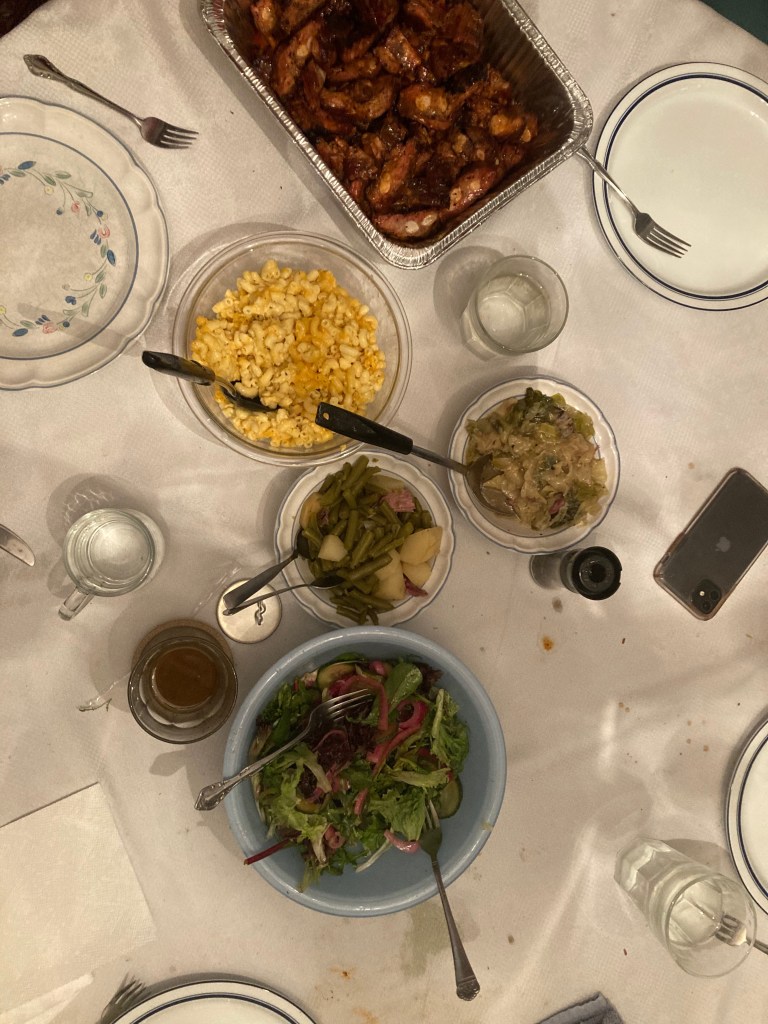
“My shower’s got a problem,” Ryan said as we sat at the table. We had stained the white table cloth green with verde sauce for our tacos, yellow with mac and cheese too hurriedly scooped up, an odd gray color from alcohol too hastily drunk and too heavily slammed down. “The tub is clogged, so the water doesn’t drain quickly enough for how fast it comes down.”
“So…” Toby ventures, “you’re standing in like a half a foot of dirty water every time you shower?”
Ryan paused. “Uh, yeah, I guess so.”
Then up to the attic, to the landing outside the room I shared with Toby. So many nights passed this way, in thickness and in warmth, with the tenor of various vices. I never wanted to smoke pot, so Zachary had boiled sugar water and squeezed lime and ice and gin into a glass to make me a cocktail — “I’m learning, it might not be that good,” he smiled. Toby bought a bottle of kombucha because he thought it might sweeten the sour taste of beer.
Nights in the hot attic though the window was open to vent the smoke, I pictured the cold hollow of my room. Perhaps the leaks still dripped from the season’s heavy snows, and the bowls and cups and buckets were still like little statues, monuments to the small-scale destruction to the roof, scattered across the floor.
But now was the lamplight and the Janes Place, and growing not only into the place, I realized, but growing into the people, and the two slowly became inextricably linked. After we smoked and drank, Ryan would retire to his second-floor room and play saxophone there, soothing the house with those low tones, and the moon above the skylight in my and Toby’s room seemed to shimmer with the dulcet sound.
Toby would have his feet thrown up on the couch, reading in the study, “tsk tsk”ing or sighing heavily when he stumbled across a beautiful line. Zachary would be cooking or baking downstairs, clattering every pot and pan so that those metallic clangs mixed and distilled the sax — music, music.
The living room was our meeting space, where we went to commune, to read — stopping at some pages to share an interesting or gorgeous passage with the group — to talk, to listen to the jazz standards that Zachary and Ryan loved, to sit in bright silence. The study became our spot for late night conversations, for when the demons of sleep would not release us.
There was no room in the house that we and our friendship had not touched, no memory of the place that was not bound up in a memory of the people, and my love for the two seemed to bloom in lockstep, as if I could not grow into the one without growing into the other.
The next morning after cleaning, Toby and I collapsed on opposite couches and debated putting something on. It was the end of March, I think.
“Probably I’ll have to go home soon,” I said suddenly, sadly. “My aunt’s not very happy.” Now with a shock, I remembered the circumstance of leaving. Now, we argue happily about which sitcom to watch. Tomorrow, off toward another plain. We would leave Chicago and one another — I would go to New York to study at Cornell. Toby would be off to D.C., Ryan to Boston, Zachary to New York City – and never again would we have the Janes Place, that collection of perfect moments strung up like vines through a trellis. Never again: we would be borne always toward our singular fates, left aglow in the brilliance of our brief and grand collisions.
I would leave from a place as I left from a person, building a home in both that was destined to be razed by time. Again, the wounded, frightened, child of my past reared her head. I heard her fear; I felt that learned instinct in her that revolted against change, seeing it only as a sign of tumult and pain. Another apartment, another home to lose, another connection frayed, another bond broken — and here, the stakes felt equally as high as in my childhood. This was a home, these were friendships that I had chosen to make, that I had the agency to create, which would now fall victim to the same processes that ripped from me the homes of my youth.
But something must be different here, it must, or else I had to admit that change was indeed something to fear. I would have to admit that I was the same child, clinging to stability, false or real.
It rained the night Toby drove me back home, a heavy rain fitting for the doorstep of spring. We both had tears in our eyes, though we would of course still see each other before we left for school, and still remain great friends. There was a sense of loss regardless. I felt a dry melancholy for it: the sad and freeing notion that there would never again be another night like this with the streetlights warping on the water like so many mercuric stars. Here, now gone, was a month of my liveliest youth: the longest time I had ever spent away from home in my young, 18-year-old life. This was where every mundanity burst with loveliness and novelty because they were ours. But never again, never again like that.
What I have is the memory: the image, clear as if I lived it today, of my books on that shelf, my bobby pins on that kitchen sink, my legs thrown over Toby’s and the four of us in comfortable, readerly silence. And again, the crumbling balconies and dead grass and cockroaches of my youth, and the windowsill happily, and with fugitive hope, decorated with a snow globe.
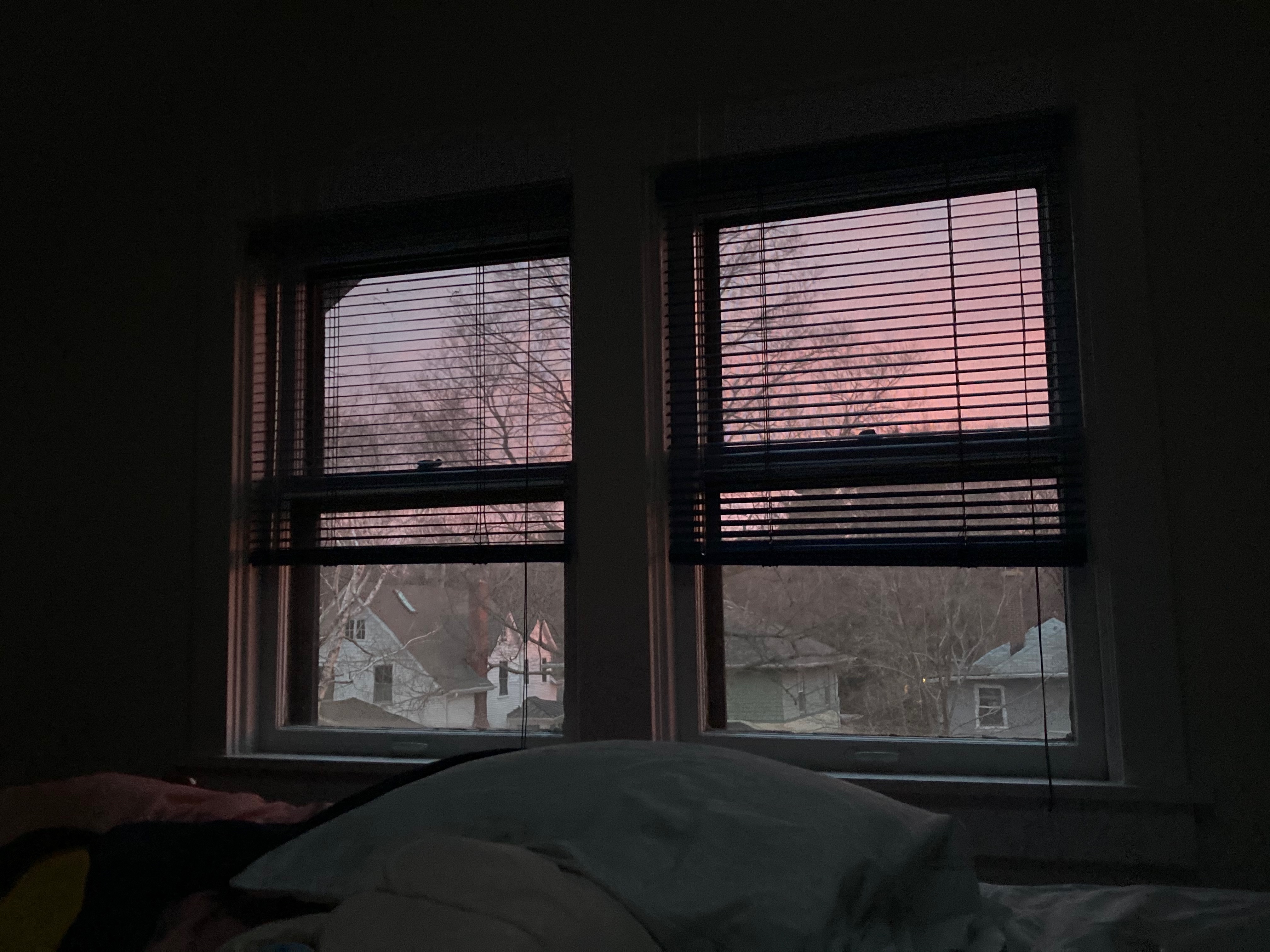
It was not until I sat on the enclosed porch one afternoon, my face turned to the sun, waiting easily for Toby’s return in the midday light, that I realized — if I wanted a life full of adventure, of movement, that left me dizzy with its beauty, this was the price to pay. The change would sometimes be moving my bed into the living room, or leaving an apartment loved by my child heart; other times, it would be departing from a home I chose to create, full of the house and the house full of me, melancholy, clinging happily to the memory of a grand time, and learning the cherish the beauty of its end.
 In Extenso
Leave a comment